Tuesday, October 26, 2010

Blocks of War III: C&C:Ancients (part 1 - the dice of Commands and Colors)

Before starting, let me state two things.

1. I know that the C&C series, even when it uses blocks (like Ancients, and the upcoming Napoleonics) isn't a traditional Block game (like the gems from Columbia and other companies). But in some fora it is considered to be part of the block games universe, just because of the physical implementation of the pieces (being, well, "wooden blocks").

2. Even if you accept C&C:Ancients as a Block Game, then this article may prove to be a bit off because it is not an overview, replay, or review of the game. Rather it is analysis of one piece of the game.

Okay, what is this article about? In brief I will try to compare the various odds of causing a casualty within the different implementations of the C&C system that we have access to, today (that is, October 2010).

Okay, first lets identify our quarry. The C&C system has, as constituent games (each implementing the system somewhat differently):

Battle Cry! (from Avalon Hill)
Memoir '44 (from Days of Wonder)
BattleLore (from Fantasy Flight Games)
C&C: Ancients (from GMT)
C&C: Napoleonics (due out from GMT)

In each case, there is a dice spread that is rolled (on situationally varied numbers of dice). The symbols of the dice then give you the results of that combat round (dead or retreating units, usually).

But each one does it different.


The oldest game in the series is Battle Cry! It has dice with the following faces:
  1. Infantry
  2. Infantry
  3. Cavalry
  4. Artillery
  5. Flag
  6. Wildcard

The three types of units in the game are: Infantry, Cavalry, and Artillery. The other pieces involved are Generals.

Infantry (killed on Infantry and Wildcard symbols) - 3/6 or 1/2 per dice
Cavalry (killed on Cavalry and Wildcard symbols) - 2/6 or 1/3 per dice
Artillery (killed on Artillery and Wildcard symbols) - 2/6 or 1/3 per dice
Generals (killed only on the Wildcard symbol) - 1/6 per dice
(by the way, here is a picture of the New 150th Anniversary edition of Battle Cry coming next year)


The next game in the series to come out is Memoir 44 - the excellent game of WWII combat. It has dice with the following faces:
  1. Infantry
  2. Infantry
  3. Armor
  4. Star
  5. Flag
  6. Grenade

The three types of pieces in the game are Infantry, Armor and Artillery. There are lots of modifiers to the basic types, but that type determines which dice faces cause kills.

Infantry (killed on Infantry and Grenade) - 3/6 or 1/2 per dice
Armor (killed on Armor and Grenade) - 2/6 or 1/3 per dice
Artillery (killed only on Grenade) - 1/6 per dice


This brings us to BattleLore - the great game of Medieval and Fantasy combat in the series. This is a great game, originally from Days of Wonder, but later on (currently) from Fantasy Flight games. Terrific scenarios (although I really like the historical scenarios that popped up on the Days of Wonder support website, before they were taken away with the move to Fantasy Flight), and lots of cool published supplements. The dice in this game have the following symbols:
  1. Red Shield
  2. Blue Shield
  3. Green Shield
  4. Sword/Shield
  5. Flag
  6. Lore

In this game all the many unit types are all given a quality color, called the Banner Color (Red, Blue or Green). Each of those units is killed on their respective dice faces (red units are killed by a red shield).

In addition, the Sword/Shield marker works like the Grenade marker from Memoir 44 (i.e. it kills all units), however there are specific times when it works and when it doesn't (based on the Weapon being used by the unit attacking). It does pretty well for almost all the hand-to-hand weapons, and half as well for missile weapons (some it just doesn't work for, like the common or short bow, as well as the cavalry reflex bow and the slingshot). Some target types get to ignore the sword/shield hits form some weapon types (i.e. - knights).


The most popular, so far, in the series has been the GMT offering, Commands and Colors: Ancients. This is the first time the series name has been used (except on some of the Memoir 44 game literature - but it is never referred to as "Commands and Colors: WWII").

The dice here are similar to those in Battlelore.
  1. Red Shield
  2. Blue Shield
  3. Green Shield
  4. Sword/Shield
  5. Flag
  6. General

The results are similar as well, with colored units taking hits from corresponding dice. Rather than weapons affecting the extra dice side, it is determined by unit type (of which there are a lot - light infantry, auxillia, medium infantry, barbarian infantry, heavy infantry and so on. For instance, light infantry never hit on the Sword symbol. Some units are immune to some hits (i.e. - heavy infantry and heavy cavalry).

Okay, the last game of the set - Battles of Westeros. Fantasy Flight Games put out this lovely boardgame about the battles of the George R. R. Martin fantasy novels, the Game of Thrones. It is based on the Richard Borg system, however there are some modifications. Chief amongst those are two - first, the command cards are not based on different sectors of the battlefield (unlike all of the other games in the series , so far). Second, the dice are eight sided. This is because of this dice spread:
  1. Red Shield
  2. Blue Shield
  3. Blue Shield
  4. Green Shield
  5. Green Shield
  6. Green Shield
  7. Valor
  8. Flag

Okay, so with this spread we have interesting results - first Green units are killed 3/8 of the time. Blue units 1/4 of the time and Red units 1/8 of the time. That makes Red units very strong, in my opinion, but I have yet to play the game (I am only judging this by what is in the rulebook, and from my understanding of the dice odds). Also, unlike some of the other games, there is no wildcard symbol in this version. Interesting.

Okay, so where does all this take us. First - I think the most tactical of the games are BattleLore and Ancients. I suspect that the upcoming Napoleonics release (which I have pre-ordered and which is due next month) should also be quite high-granularity in its tactical details. But most importantly, in the games where there is little in qualitative difference among the troop types (i.e. - Memoir 44 and Battle Cry) there is a big difference in the odds of basic types (like infantry) vs. the stronger types (cavalry, armor, etc) being killed. Fair enough - without the differences of different grades (or weapons, etc) you have to introduce some tactical difference.... Now, I have to see Westeros to see where the interesting bit is there, I suspect it may be amongst the different leaders and their abilities, but it is not in my clutches yet!
Okay, so that is what I have to say on dice. Curious that in some the difference in odds is driven mainly by attacker difference, and in some others the difference in odds is driven mainly by defender differences. In all cases, the dice pool size being rolled is a function of attacker type. Regardless they all play somewhat different because of these variations, and that is what makes the whole series appealing, rather than just one or two of the titles.
Tags:

Monday, October 25, 2010

October 25 - a day of famous battles

There are at least three great battles that the staff of Gaming with Chuck is particularly fond of, that all took place on October 25.  Other than being something like the 289th day of the year, it is also St. Crispin's Day (Crispin Crispianus) as any fan of Shakespeare will no doubt remember (read on)...


The first, of course, is the Battle of Agincourt in 1415. This battle marked the defeat of the Prince of France by young King Henry V of England in the 100 years war. Great stuff, and the product of many boardgames and miniatures rules. It is celebrated in Military History as one of the marker battles in the Revolution in Military Affairs the culminated in the ascendancy of Infantry over Cavalry as the chief battlefield arm. And there were a whole lot of longbows. And of course there is the fantastic treatment (mostly fictional, but still great fun) given to the battle by Shakespeare in his timeless "Henry V". The famous Band of Brothers speech comes from that play.
Great treatment of the battle from a bunch of different angles is given at Wikipedia
We few, we happy few, we band of brothers;
For he to-day that sheds his blood with me
Shall be my brother; be he ne'er so vile,
This day shall gentle his condition:
And gentlemen in England now a-bed
Shall think themselves accursed they were not here,
And hold their manhoods cheap whiles any speaks
That fought with us upon Saint Crispin's day.


The second is the Battle of Balaclava in 1854, in the Crimean War. This is a battle fought between the British and French on one side, and the Russians on the other, over the rights of Turks amongst a bunch of other hegemonical things.  Other than the fact that it was a very interesting battle it is also the occasion for the famous Charge of the Light Brigade, which inspired the stirring poem of Alfred Tennyson.
Excellent article on the battle (with maps, bios of the commanders, and a blow-by-blow including the stirring events of the North Valley that led to the Charge of the Light Brigade) is located at Wikipedia.  Some excellent maps are located at the battle's webpage at History of War.
Half a league, half a league,
Half a league onward,
All in the valley of Death
Rode the six hundred.
"Forward the Light Brigade!
Charge for the guns!" he said.
Into the valley of Death
Rode the six hundred.


Finally, in our own history, from October 23-26 the largest naval battle in history was fought - the Battle of Leyte Gulf in 1944. The Imperial Japanese Navy lost a fleet carrier, three light carriers, three battleships, eight cruisers and countless lighter vessels and planes. The United States lost one light carrier (and some lighter escorts). It was a victory for the US and secured not only the Philippines from the Japanese, but also halted the IJN from being a serious threat - in fact the only remaining surface action of any size that the Japanese dared after Leyte Gulf was the suicide run of the Yamato at the very end of the war.
Good article, with fantastic maps (for wargaming and just general historical drooling) again at Wikipedia


Hope to see you wargaming, soon!
Chuck


Tags: ,

Thursday, September 30, 2010

Renaissance Wargaming


Wow - this was (and I guess still is) one of my favorite periods in history.  Historians (as with most things) quibble over when the Renaissance should be placed (I think it goes well with the dried flowers on the mantle, but I never could decorate properly).  And of course there is some concern over the Northern vs. the Southern renaissance.  However, in painfully broad terms, this refers to the time of transition from the Medieval World to the Age of Enlightenment.  Warfare is characterized by a re-ascendancy of infantry over other arms; a rapid improvement in the worth and effectiveness of firearms; and causes for fighting that coalesce around modern ideas such as nuance in religious identity and nationalism.  In other words, Tercios, Pike & Shot, Roundheads, Sakers and Demi-Sakers, and all that other fun jazz.


There is a website making available a great series of articles from Airfix magazine that were all written by the most excellent wargamer, George Gush.  For those who don't know about George Gush, he is the author of several old-school sets of rules that continue to be played quite popularly.  One of those was the WRG set on Renaissance Warfare.  From the WRG Historical Archives
"In June 1976, a set of War Games Rules for the period 1490-1660 written by George Gush was published and this was followed in April 1978 by a slim book of 41 Army Lists. In 1979, the second edition was published and followed in March 1984 by a much thicker book of Army Lists which now included 90 armies. Since George now owns the copyright, no pdf version is included here."
George Gush's most excellent rules for 1490-1660

Okay, back to the articles.  These were published in the 1970s by Airfix Magazine, and other than a short introduction to the period (Part 1), there are sections on Infantry weapons and Tactics, Artillery, and Cavalry.  Then a whole series of different national army articles.  Very nice.  here is a list of the articles.
The website follows up with some links to other articles that Gush wrote, concerning Renaissance military concerns (from a website called My Armoury that features absolutely fabulous articles on military history as well as sword crafting).

This is mother's milk for a wargamer, and interesting for those of us with an interest in Military History in general.

Now if only Richard Borg would do Commands & Colors: Pike & Shot!

(please don't take this too seriously, it is meant as a joke - and wishful thinking)


Tags: , , , , ,

Saturday, September 18, 2010

Blocks of War II: Wizard Kings

The second block game to get the "Gaming With Chuck" treatment, is Columbia Games' excellent fantasy wargame, Wizard Kings.
Classic Orcs/Elves matchup, right out of the box

This is a terrific design, from 2000, following on the 1998 release of Victory: The Blocks of War. In both cases, the game itself is sort of a "game kit" in that it gives you some maps (which are geomorphic), a pair of generic armies, and some rules. The games themselves are actually scenarios that use some subset of the bits that come in the box. The scenario can be as simple as "Each side chooses 100G of pieces, and come on the map from opposite sides. The last man standing wins". Not very exciting, but certainly a scenario. Now with the same pieces, a totally separate scenario can be played next time - very cool indeed (although this is true of almost all scenario based games).

The base game comes with four maps (in the first edition, maps numbered 1 through 4 - there are 8 more maps available from Columbia Games as add-ons, and there are four more numbered 13-16 in the second edition box set). An impressive variety of terrain types are represented on the maps, and all sorts of terrain configurations become available.

At the beginning of the match, players select their armies based on a Gold Piece (point) value. As with Hellenes, this is a classic Columbia style design, where the blocks take hits over time. When "purchasing" a unit for a scenario, therefore, each successive level of the unit must be bought (up to the block's maximum, usually three or four). The blocks are then placed on the board, in the cities on your side of the map if playing the basic scenario, and the game starts.

There are seven different armies available for play. This has changed between editions, but with the first edition of the game (which I own) the armies were Elves and Orcs (both came with the box set); Dwarves; Amazons; Norsemen; Undead; and Beastmen known as the Ferkin (more like Pigmen than Beastmen). Each army has a unique set of unit types, but all involve a wizard, as well as an assortment of other unit types.  In the second edition, the Ferkin are replaced with a generic Human Medieval army.  The other big differences between the two editions are in how additional armies are acquired.  In the first edition, the game came with complete Orc and Elf armies.  You could purchase the other five armies, each separately, for a couple of bucks each.  With the second edition, you get a handful of blocks in the main set for each army, and you purchase reinforcement packs which come with random new blocks and stickers, enough for some in each army.  With the second edition, you automatically get some blocks for each army whether you like it or not (who wouldn't?).  There were also Chaos Mercenary sets (which included a bunch of monster, and enough blocks to assign four to each of the seven main armies), and the Were-Creatures set, which added optional rules to use phases of the moon to enhance/limit Were Creatures, and another set of four blocks and stickers for each of the seven Races/Armies.  The third big difference between the sets are the maps - the first edition comes with maps 1-4.  The second edition comes with maps 13-16.

Multi-player game in progress
The game plays very well, and the pacing and advancement of the game are fun, if sometimes a bit slow. When playing the standard scenario, which is simple conquest of the cities belonging to your opponent, the game can devolve into a big slugathon. But when playing any of the multitude of scenarios available (or making some up) the game becomes much more interesting.

Other than Magic, which is represented by a list of spells that your wizard can cast (each army is different, which gives good variety and more "feel" to the individual armies), the tactical combat rules are similar to other block games. Each unit has an initiative rating, and a combat ability rating. The initiative is a letter which gives general order for the blocks (lettered, 'A', 'B' and 'C'). Then the combat ability is a number, below which a dice rolled for that unit will score. Unlike Hellenes, there is no card play (although on the excellent support fansite, Wizard Kings Wiki, there is a variant that used cards very similar to how they appear in Hammer of the Scots - a variant that continues to intrigue me), there is no route capability in combat. Other than scenario specific, cities do not need to be besieged.

The game is fun, interesting (if you like fantasy), ripe for scenario development, and suitable for multi-player play (which is great, if you want something more than a typical 2 player wargame). Recommended, and a great block game.

After some movement and combat, it is then time to reconstitute.  In most scenarios this means that you now have Gold Pieces (points) in order to either add to reduced levels of blocks out there, or to buy new blocks (and maybe enhance them up a few levels).

I played a couple of rounds lately with my daughter, and she had a great time.  She then helped me set up my next game of WK, and picked Orcs vs. the Undead.  An uppity Necromancer wanted to take over the land of the Goblinoid hordes.  It was a good game - the cheap easily replaced Orc Army light infantry kept coming back after a slaughter, whereas many of the units in the Undead Army are quite expensive, so even when they did return from the dead, it took a couple of turns to build up their strength.

Tags:

Sunday, August 29, 2010

Blocks of War I: Hellenes by GMT

In a recent high level of activity, I played a number of different block games. For the purpose of this series of articles, I am going to stretch the definition a bit and include the most excellent Richard Borg title "C&C:A", but this first entry, Hellenes from GMT is a classic block game in the most perfect tradition of blending the Columbia Games heritage with GMT's added goodness.
Hellenes - Sparta in Red, Athens in Blue

Going back to Hammer of the Scots, and some titles from before, Columbia has been blending the great idea of their block games (which feature 1-sided wooden blocks for units, allowing for great fog-of-war; and the blocks rotate showing stepwise reduction in combat unit strengths) with the more modern ideas of card-activation in a wargame.

I don't know for sure (and I bet there are half a dozen forum articles and geeklists at Board Game Geek on the topic) but I think that the first of the card-driven designs may have been Hannibal and Successors both from Avalon Hill, but these were quickly improved and followed up by For the People, Paths of Glory and Wilderness War from GMT. With the design for Hammer of the Scots, Columbia expanded the idea to separate the unit activation cards from event cards. Each round a player picks one, and it gives either a number of activations (for units or groups of units), or an event. This keeps the game always fresh and adds a lot to replay value. The GMT idea for the cards had three things on each card - unit activations, events, or replenishment - and when a card was picked, the player then had to choose which they wanted. The cards were balanced, so that the really good activation cards usually had the good events, and so on, so that the decisions were tough and required some decent thought and planning. Elements that make for a great game, in my book.  By the way, see the homemade map for Hammer of the Scots, by DK Kemler (as posted on Board Game Geek)- it is beautiful!

Homemade map for Hammer of the Scots
The recent game Hellenes from 2009 takes the Columbia idea of blocks with hidden values, and rolling for combat based on a two-value combat rating. The first value is a letter (in this case, from A to F) that gives the basic "initiative" value of the fighting - so that all A units fight before all B units and so on. Then there is a numerical value (usually from 1 to 3) which gives the target number for scoring a hit. Roll 1d6 for the strength (called the Combat Value, or CV) of the block (which ranges from 1 to 4, based on the current strength of the unit), and each dice that is equal or less to the "hit" number scores a hit on the enemy. An equal range at the top of the dice span means an enemy unit is routed. There are specifics about which units take the hits first, and who routs first, etc. Simple, but elegant, and gives great results with some appreciable depth. So far, this is classic Columbia Games (although I don't recall seeing the to-rout capability in older designs). But GMT adds rules for naval transports (there are, not surprising in a game on the Peloponnesian War, lots of naval units), as well as rules for sieges, pillaging, and so on - to capture the feel of the city states going into rebellion, and being besieged (all from Thucydides - great stuff). And with the activation cards all having an event, the goodness from GMT makes its way in.

There is a 2007 Columbia design on the same topic - Athens & Sparta, which appears to be a little bit simpler, and can cover the entire war in one sitting (whereas the more detailed Hellenes covers scenarios of the war in a single sitting), but it is a small matter of difference about which card system you prefer. Both have their strengths, and both (to me anyway) are appealing.

On Thursday, August 26, Wayne and I played a game at the weekly ODMS meetup, and he took Athens while I became a Spartan general for the evening. The game was great, and although I won, I believe it was due to a fluke in my exploiting the economic engine of the game a turn before Wayne was prepared for it. We have scheduled a rematch, and shall see how it goes. This time I think there will be a lot more fighting over the point-value-rich colony city states. It, like the original war, should be glorious!

On a side note, I would like to put out an endorsement for two histories on the Peloponnesian War - the first from Donald Kagan (The Peloponnesian War) (a few years older, but quite excellent), and the second from Victor Davis Hanson (A War Like No Other).

Thanks,
See you soon - Chuck

Tags: , ,

Wednesday, August 25, 2010

Autumn Gaming is Approaching

After a very successful "end of summer" wargaming event - the ODMS convention, Guns of August, the staff from Gaming with Chuck is looking forward to some Autumn Wargaming.


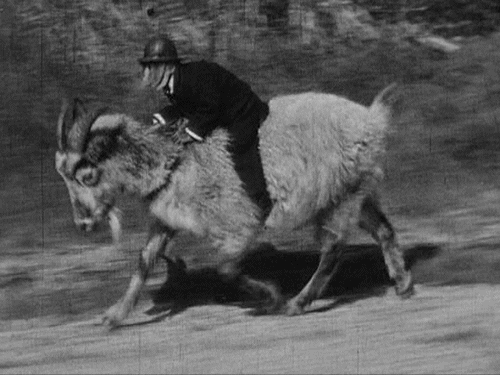
Autumn is coming at us hard and fast, like a Monkey riding a Goat, and if the schedule isn't filled up soon with some gaming activities, then all of the normal stuff that takes place this time of year will ensure that there ain't no gaming! So to keep that from happening, we hear at staff HQ are going to try to do some weekly boardgaming, as well as an occasional Thursday night wargame with the ODMS guys.

Upcoming possible wargaming projects include:
DBA campaign revolving around Phillip II's conquests (being organized by Cliff)
Victorian Colonials (TSATF) (by me)
Cold War Commander (Wayne and Scott)
My Galley Sally (Dave D)
C&C:Ancients (Wayne)

Boardgaming at HQ will likely include:
Zombie Dice
Pandemic
Agricola
Albion
Steam
Wizard Kings (maybe...)
And the usual (see the Boardgames tag for more on what usually goes on around here for boardgaming)

Tags: ,

Wednesday, August 18, 2010

Guns of August, After Action Review

ODMS Convention Page

The convention was a great success, from the perspective of the staff. I can only hope the gamers felt the same way! (comment about your experience, please!)

On Thursday we got to the hotel (a day before the official start) to meet with the hotel staff and make sure everything was ship-shape. The tables we rent were late getting there, so some of the ODMS guys helped to set them up right, so that everyone's games would go off with a minimum of disturbance over the weekend.

After all the setup (and getting the hundreds of sodas and snacks loaded into our Hospitality Room), there was a round of boardgaming in the gaming area (the tables have to be broken in, you know). The Vendors continued arriving all evening, from all over the eastern half of the US, and set up their fantastic wares.

The Thursday night boardgaming was terrific. I played a really neat game of Reef Encounter (polyps anyone?), and then proceeded to totally Borg out in repeated games of Commands & Colors: Ancients (for those who don't know, Richard Borg is the designer of C&C:A).

The Reef Encounter game was with Anita, Heidi and Jeremy, and was a lot of fun. Jeremy was king Shrimple, getting his prolific shrimp all over the ocean floor, and it turned out that his Parrot Fish ate the most coral.

The C&C:A games were mostly against Wayne, but I also played against John Snelling as well. the battle was the same for each game - the Battle of Leuctra. Every time I played the Theben army, and every time I got the Sacred Band killed off by the Spartans. The first game was the most humiliating, as Wayne's Spartans totally eviscerated me in about four turns. I actually won a game or two, but still lost the Sacred Band each and every time. I guess they weren't that Sacred after all.

Friday came, and there were plenty and plenty of miniatures games, as well as a whole lot of board games. I had to leave the convention in the afternoon for a few short hours, but in the evening when I returned, I got to run my "Neil Thomas" rules Napoleonics game. It was an a-historical scenario - set in 1813 Saxony, with a British force facing off a French force twice its size, trying to buy time for the Prussian command in the area to arrive and help against the French. The British were played by Paul Knight, the Prussians were played by Scott Kidd, and the French were played by two players new to the rules, whom I did not know, but whom were real gentlemen to play with. The game went well, with Paul playing the role of a British commander very well (form a defended and anchored line of Infantry and hold it against repeated French assaults). The Prussians finally arrived, and the French decided that they had enough. My apologies to my players for not providing some really good player aids (the game needed quick-reference sheets).

Saturday came, and during the day all I did was to help out with the convention (spending many hours in the morning working Registration and meeting many of the great gamers who came to play at our show). In the afternoon, I got to spend a few short hours enjoying the hotel swimming pool (highly recommended) with my Daughter and some friends, and spending time talking to new gaming friends as well. Very nice.

Saturday afternoon, our Boardgaming room was a complete hit! It was filled to overflowing with boardgamers playing old and new wargames, and the Euro-games library that we had in the Hospitality Suite was really put to good use, with a bunch of gamers checking things out (most popular - SmallWorld and Steam). Tons of gaming in the Hospitality suite as well - Ticket to Ride, Carcassonne, Settlers of Catan, and so on.

On the Wargaming front, everything from the old SPI classic 1918 to the much newer Washington's War were being played. There was also the double blind Axis and Allies game (each player only knew where his own pieces were, not even his allies). Neato.

Napoleon came and visited the convention on Saturday afternoon, and stayed until about 5:00 or so, when he gave an address to the gamers and bid his Adieu. Afterward, the great Guns of August Raffle took place, and thirty great gaming prizes were raffled off.

Saturday evening brought a new round of gaming for all involved, and I got to run my game of The Sword and the Flame. It was a total fun-fest, with the Anglo-Indian army attempting to rescue a small command of Miners waiting for transport down a river, and suddenly attacked by hostile hill tribesmen. This time, the British and the Indian troops were able to rescue the miners. A few casualties, but it was a successful operation.

Late night Saturday there was more gaming. Card gaming, to be sure. Plagues and Pestilence, which I (miraculously) won. I almost never win those kinds of games, because there is almost always a "pile on chuck" phase, but this time I drank some excellent imported beer, and played it cool, while my fellow Medieval City Builders were busily destroying each other with mongols, vikings and bubonic bonbons.

Sunday came, with more gaming and final shopping in the great Guns of August Hobby Bazaar, and afterward the vendors started breaking up and heading home, and the final games were played, and we all sang hey nonny nonny and bid each fare-thee-well until the Williamsburg Muster.

It was a great time, and I hope you can make it to our next show!

Tags: , Tags: